Purchasing process · 6 min read
What happens if the project is never built? How to choose a developer in Miami

Published
In short
"Vivi, what if the building is never finished?"
In this guide
That's how they ask me, almost always on the first video call. I answer you the way I answer every family: in Florida, your pre-construction deposits go into an escrow account regulated by Florida Statutes 718.202 and 718.503, and the first 10% stays there until closing. But the most important filter is applied before signing: choosing a developer with years of experience and completed buildings. I explain the legal details in my guide to deposits and escrow in Florida.
The most common fear before reserving
And I understand it. You're about to send your money to another country for an apartment that doesn't exist yet. It's normal to feel afraid. Ale and I are investors too, and we know what it's like to sign for something that's still on paper.
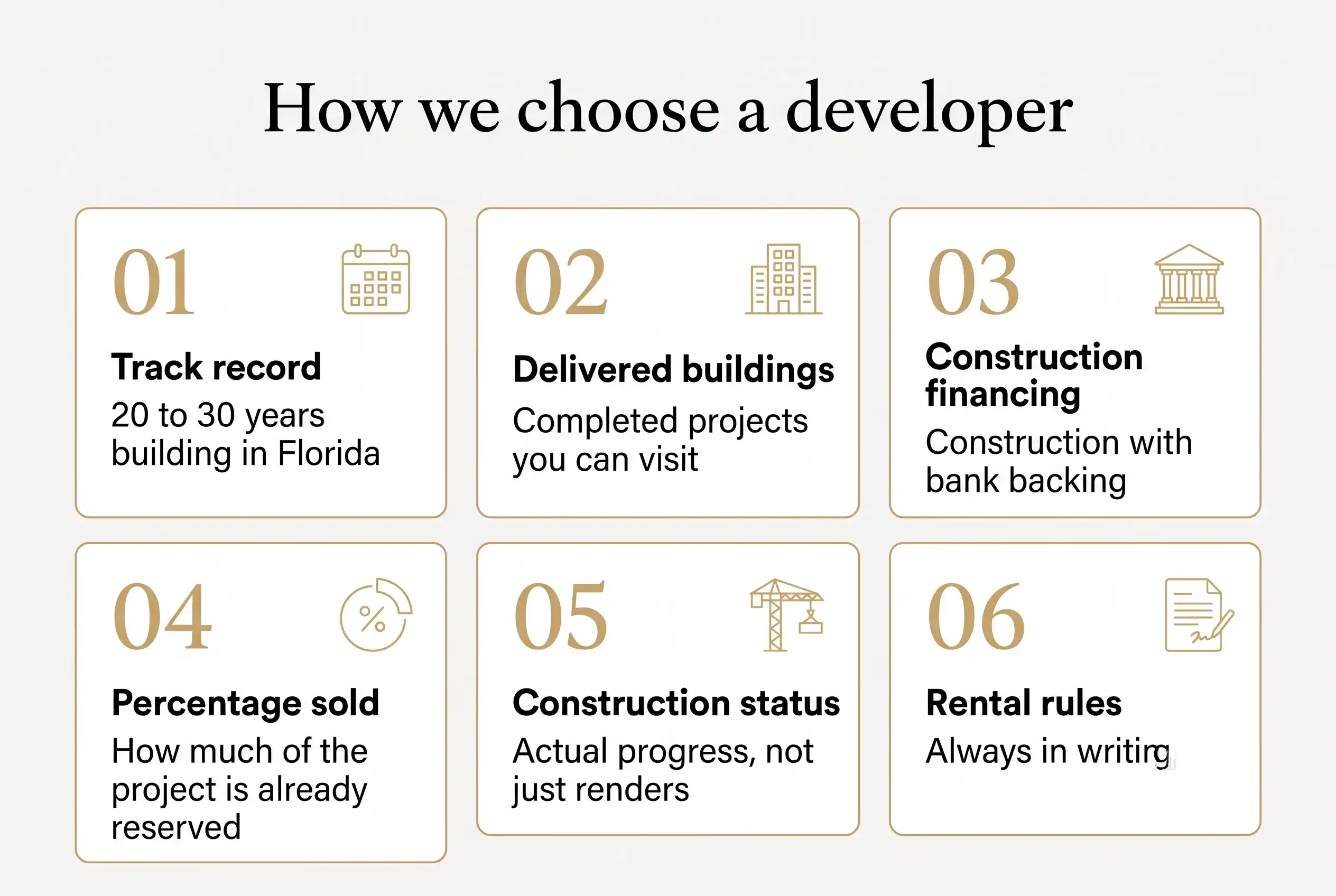
That's why, at Vivi & Ale, we only work with developers who have 20 to 30 years in the Florida market and experience building and delivering projects. We don't sell just any project: we choose those whose developer gives you more confidence in the process and in the delivery.
The law protects you, but it doesn't do that work for you. We apply that filter together.
What the law protects and what it doesn't
Chapter 718 of the Florida Statutes regulates condominiums and sets clear rules for your money.
What the law protects:
- Your money goes into escrow. Deposits are held by an independent agent: a bank, a member of The Florida Bar, a title company or another authorized entity. The developer cannot be the escrow agent, and your contract must say who it is, so you can ask them for your deposit receipt.
- The first 10% is not touched. Up to 10% of the price stays in escrow until closing, even if construction has already started.
- Anything above 10%, only once construction is underway. Money above 10% can only be used once construction has begun and if the contract allows it. If the project is canceled before construction, that money stays in escrow.
- A refund if the contract is terminated. If the contract is terminated under its terms or under the law, the escrowed funds are returned to the buyer with their interest.
- 15 days to cancel. From the moment you sign and receive the condominium documents, you can cancel in writing without giving a reason.
- A registered project. Before signing contracts, the developer must file the condominium documents with the DBPR Division of Condominiums, the state regulator.
What the law doesn't guarantee:
- The delivery date. The timelines and what happens if there's a delay are defined by your contract.
- The money that's already in construction. If the contract allows deposits above 10% to be used, that money may already have become concrete and steel.
- That the developer is solid. The law sets the rules. Choosing well is up to you, and that's where I come in.
Two examples of what a track record means:
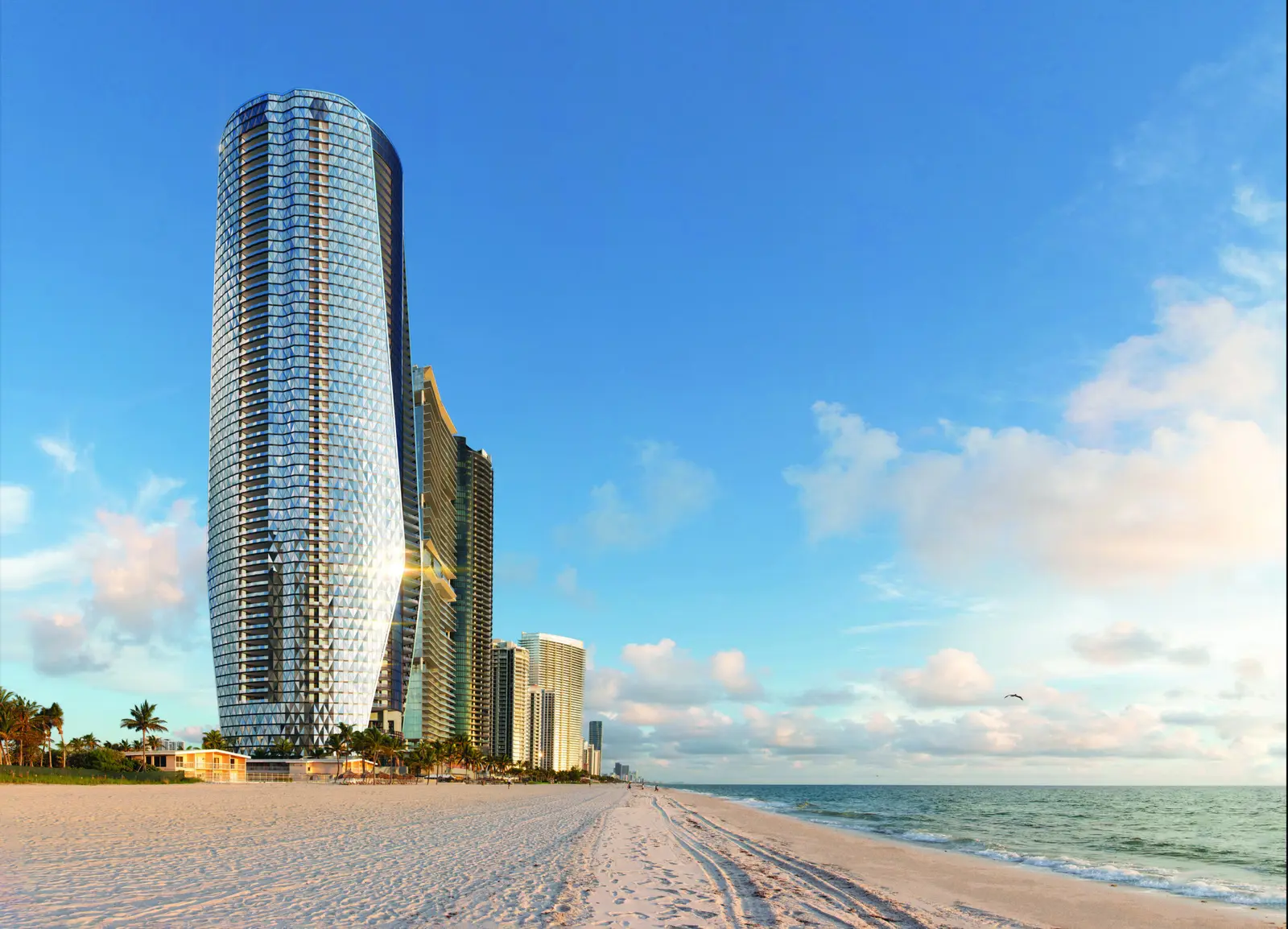
- Bentley Residences is developed by Dezer Development, which has been buying oceanfront land in Sunny Isles Beach since 1985 and has already delivered several luxury towers in the area.
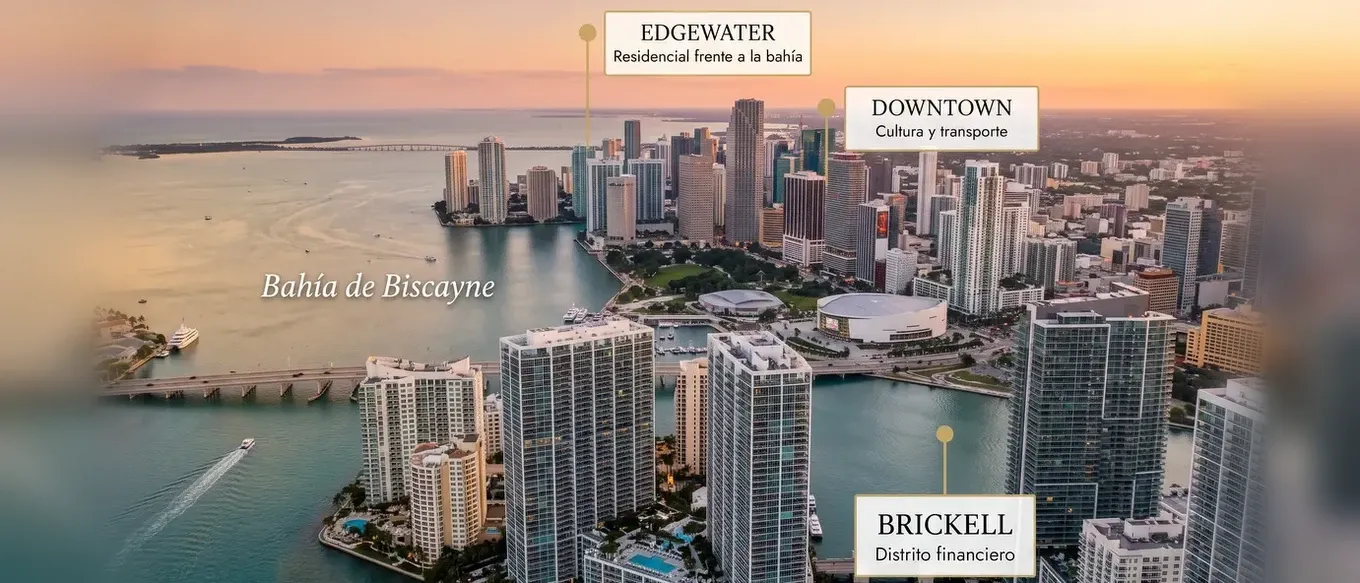
- 619 Brickell by Nobu is developed by 13th Floor Investments and Key International, a family firm that has been developing in Spain and the United States since the 1970s.
Choosing this way is the first step of our V4 Method: choosing based on your budget and your goal, with clear criteria.
If you're worried the building won't be delivered, message me: it's the question I get asked the most, and I love answering it.
Red flags
None of these signs, on its own, means a project will fail. But each one deserves a question before you sign:
- A developer with no completed buildings in the United States. They may have a track record in another country but not know this market's permits, suppliers and timelines.
- Payment plans outside escrow. If you're asked to wire money to an account that isn't the escrow agent's, stop.
- Rental promises without paperwork. If they tell you that you can do Airbnb and the condominium declaration doesn't say so, that promise doesn't protect you.
And one more that I always share: if you're thinking about a resale building instead of a new one, the law also changed a lot after Surfside. I tell you about it in new vs. resale condos in Miami.
The 8 questions I review with every family
Before reserving, I go over these questions with every family I work with. Ask the sales team for the answers in writing:
- How many buildings has the developer delivered in Florida, and which ones?
- Who is the escrow agent, and how will they send me receipts?
- Does the contract allow deposits above 10% to be used for construction?
- Does the project have a construction loan? From which lender?
- What percentage of the units has been sold?
- What stage is construction in, and what is the estimated delivery date?
- What does the contract say if delivery is delayed?
- What rental rules does the condominium declaration include?
If you'd like to have it on hand, I can also send it to you as a PDF: just leave me your email.
Frequently asked questions
Vivi, do I lose my deposit if they cancel the project?
If the developer cancels the project before construction starts, they couldn't have used your deposits for construction: they're still in escrow. How and when they're returned is defined by your contract. That's why we review it together before you sign.
Can I go see the construction site?
If you come to Miami, we tour the projects and their sales galleries together. Access to the construction site itself depends on each developer, for safety reasons. If you're buying remotely, I share the progress updates the developer publishes.
What happens if delivery is delayed?
It depends on your contract. That's where you'll find the estimated delivery date, the leeway the developer has and your rights if that deadline passes. We review that section with you during the 15 days to cancel.
How do I know how much of a project has been sold?
Ask the sales team and request written confirmation. Some developers announce it when they reach a sales milestone. I share what I know about every project I recommend.
My commitment to you
We work with our hearts, but also with the truth. I would never recommend a property that wasn't right for your budget and your goals, nor would I hide important information. If something about a project doesn't convince me, I'll tell you.
If this fear is holding you back, let's talk. Message me on WhatsApp or book your video call and I'll explain how Ale and I choose every project with the V4 Method.
Sources
- Florida Statute 718.202 (escrow deposits)
- Florida Statute 718.503 (contract, documents and 15-day cancellation right)
- DBPR: Florida Division of Condominiums, Timeshares and Mobile Homes
- Wikipedia: Michael Dezer and Dezer Development: completed developments
- LoopNet: Key International
- Construction Review: 619 Brickell by Nobu development team (2026)
This content is for informational purposes only and does not replace advice from an attorney licensed in Florida.